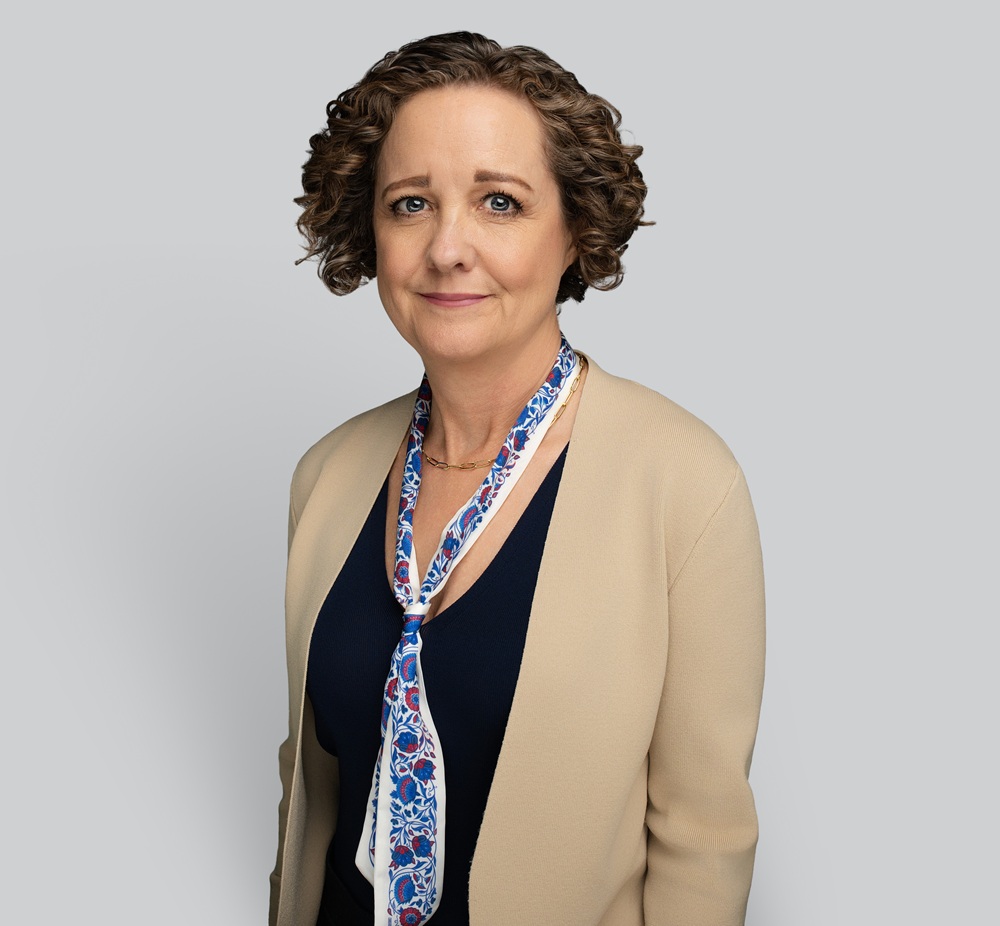
Jeanette Ward is President & Chief Executive Officer of Texas Mutual Insurance Company. She brings extensive experience in insurance operations, underwriting, and claims management, with a strong focus on delivering value to policyholders through efficient, reliable service.
Over the course of her career, she has held a range of senior leadership roles within Texas Mutual, developing deep expertise in workers’ compensation and building a reputation for operational excellence and customer-focused leadership. As CEO, Ward is focused on strengthening the company’s core capabilities, enhancing its use of data and technology, and ensuring it remains responsive to the evolving needs of employers and injured workers across Texas.
Texas Mutual Insurance Company is the leading provider of workers’ compensation insurance in the state of Texas. Established in 1991, the company specialises in providing coverage to businesses of all sizes, helping protect employees and support their recovery in the event of workplace injuries. Texas Mutual combines strong underwriting discipline with a focus on workplace safety, claims management, and return-to-work outcomes.
The company plays a key role in the Texas economy by supporting employers with risk management services and maintaining a stable, competitive workers’ compensation market. The company is also committed to building a stronger, safer Texas through an extensive philanthropy portfolio that supports Texas businesses and the state’s workforce. In recent years, it has invested in digital capabilities and data-driven processes to improve service, efficiency, and overall customer experience.
Texas Mutual Insurance Company is the leading provider of workers’ compensation insurance in the state of Texas. Established in 1991, the company specialises in providing coverage to businesses of all sizes, helping protect employees and support their recovery in the event of workplace injuries. Texas Mutual combines strong underwriting discipline with a focus on workplace safety, claims management, and return-to-work outcomes.
The company plays a key role in the Texas economy by supporting employers with risk management services and maintaining a stable, competitive workers’ compensation market. The company is also committed to building a stronger, safer Texas through an extensive philanthropy portfolio that supports Texas businesses and the state’s workforce. In recent years, it has invested in digital capabilities and data-driven processes to improve service, efficiency, and overall customer experience.Over the past 25 years, Texas Mutual’s most significant transformation has been the shift from paper based, labor intensive processes to a digitally enabled, data driven operating model. As Jeanette Ward explains, early investments in paperless workflows and predictive analytics laid the foundation for operational efficiency, scalability, and consistent decision making across underwriting and claims.
Looking to the future, Ward highlights long term trends such as automation, evolving workforce dynamics, and sustained declines in injury frequency as key forces shaping the workers’ compensation market. While emerging technologies – including artificial intelligence – will play an increasingly important role, she emphasises that they are most effective when used to support human expertise rather than replace it, particularly in claims handling where trust, judgment, and empathy remain essential. Texas Mutual is responding by strengthening organizational alignment, modernizing its technology platform with discipline, and investing in leadership and culture to ensure innovation remains purposeful and mission driven.
Michał Trochimczuk: Last 25 years – What have been the most important technological developments for the insurance industry in the last 25 years and what significance have they had for Texas Mutual’s business?
Jeanette Ward: When I look back over the past 25 years, the most transformative developments were not necessarily the most visible ones. For Texas Mutual, the early move to paperless operations in the mid-1990’s fundamentally reshaped how we function. Workers’ compensation is an extremely document heavy line of business, from policy documentation to medical narratives, authorizations and billing. Digitizing these flows early allowed us to reduce friction, improve accuracy, and operate more flexibly across our corporate and regional offices.
Equally important was our utilization of data and analytics. Long before AI became a mainstream conversation, we invested in predictive analytics to support pricing, underwriting and claims. This enabled a large part of our business – particularly renewals and medical bill processing – to be handled automatically, allowing us to scale without proportionally increasing headcount. The value wasn’t just derived from the automation, but also from consistency and decision quality.
Digital customer access reshaped expectations across the industry too, of course. Agents and employers expect speed and self-service, and we've kept pace with that. But the bigger story for us is really what those first two shifts made possible. They gave us the foundation for where we're headed next.Michał Trochimczuk: Current challenges – The world is facing geopolitical, economic and environmental challenges. Which are most important from Texas Mutual’s perspective, and how are you tackling them?
Jeanette Ward: From Texas Mutual’s perspective, global challenges must always be interpreted through their local impact because a strong Texas economy directly translates into a strong Texas Mutual. One of the most persistent challenges we face is sustained rate pressure in workers’ compensation, driven by decades of declining injury frequency. While this is positive for employers and workers, it places pressure on carriers to operate efficiently and sustainably.
Environmental factors and in particular heat exposure, are increasingly relevant, as we see more seasonal injury patterns surface. At the same time, workforce availability and skills shortages are growing concerns for employers across industries. We address these challenges through a combination of operational discipline, investment in safety, and broader workforce development initiatives through our strategic philanthropy program.
Because Texas Mutual is mission driven rather than purely profit driven, our goal is to strengthen Texas businesses over the long term. That perspective allows us to view market pressure not as a threat, but as a call to evolve responsibly maintaining stability while continuously improving efficiency and resilience.
Michał Trochimczuk: Next 25 years – What changes will most impact insurance, what do you expect for Texas Mutual, and what role will technologies like AI, IoT or quantum computing play?
Jeanette Ward: Looking ahead, I expect the insurance industry and in particular workers’ compensation, to be shaped by long term structural shifts rather than sudden disruption. Automation, robotics and changing job designs will likely continue reducing workplace injuries, keeping downward pressure on rates. That means efficiency and adaptability will become even more critical for insurers like Texas Mutual.
I also anticipate that advanced technologies will play an important role, but not always in the dramatic ways people imagine. Artificial intelligence, in particular, presents tremendous opportunity when applied thoughtfully. I see its greatest value in synthesizing complex claim information like medical records, claims history, disability guidelines to guiding human decision makers rather than replacing them. Claims in the workers’ compensation line especially, will always require human judgment and empathy, but AI can remove administrative burden and highlight where expertise is most needed.
Technologies like IoT show promise in workplace accident prevention, but regardless of the technological advancements, for Texas Mutual, the priority is the disciplined leveraging of technology to enhance decision quality, employee experience and customer outcomes, while remaining grounded in our mission and stewardship mindset.Michał Trochimczuk: Given Texas Mutual’s safety and dividend programs, what patterns are you seeing in serious injury trends and employer engagement, and how is this shaping underwriting and risk management?
Jeanette Ward: One of the programs I’m most proud of at Texas Mutual is our dividend program, which directly rewards employers for strong safety performance and long term partnership. Over time, this has proven to be one of the most effective incentives for sustained loss prevention, far more impactful than more surveillance based approaches.
In terms of injury trends, motor vehicle accidents remain the leading cause of serious workplace injuries and fatalities, and that has remained stubbornly consistent. We are also seeing increased attention on heat related injuries and emerging risks such as workplace violence, though these are still smaller contributors overall. These insights directly shape our pricing safety messaging and risk management services. However, rather than simply pricing for risk, we hope to actively help employers reduce it. Data plays an important role in identifying patterns, but engagement is ultimately driven by trust. When employers see safety translate into better outcomes, whether it’s financial through lower rates and dividends, or operational benefits, they are far more likely to invest in accident prevention and partner with us over the long term.
Michał Trochimczuk: How does Texas Mutual approach digital transformation from an organizational perspective, particularly decision making structures, silos, and business IT alignment?
Jeanette Ward: We’ve learned that digital transformation is as much an organizational challenge as it is a technical one. Historically, we experimented with both business led and IT driven initiatives, and both resulted in more siloed solutions with neither delivering the simplicity or value we wanted. Today, our approach is intentionally different.
Everything starts with the business strategy, but solutions are informed by technology realities and long term maintainability. We’ve reshaped our leadership structure to focus on value delivery across the organization rather than functional optimization. At the same time, we refreshed our core values to explicitly reinforce the behaviours we need to be more agile and effective, including challenging the status quo, driving results, being accountable, and engaging in constructive challenge.
Alignment is reinforced through a unified leadership goal, leadership incentives and cultural expectations. Transformation follows a clear order: people first, then process, then technology. By investing in leadership capability and breaking down silos before deploying new processes or solutions we hope to create the conditions for sustainable transformation, reducing complexity rather than creating it, and ensuring that business and IT are truly working toward the same outcomes.