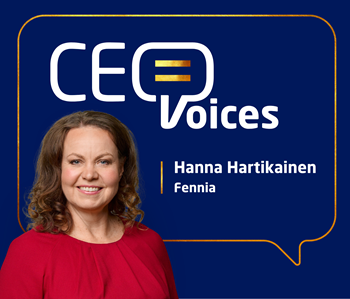
Home » Insights » CEO Voices – An Interview with Hanna Hartikainen, CEO of Fennia

CEO Voices – An Interview with Hanna Hartikainen, CEO of Fennia

Mar 19, 2026 CEO Voices


Instant, Intelligent, and Trusted: Adapting Insurance for the Future

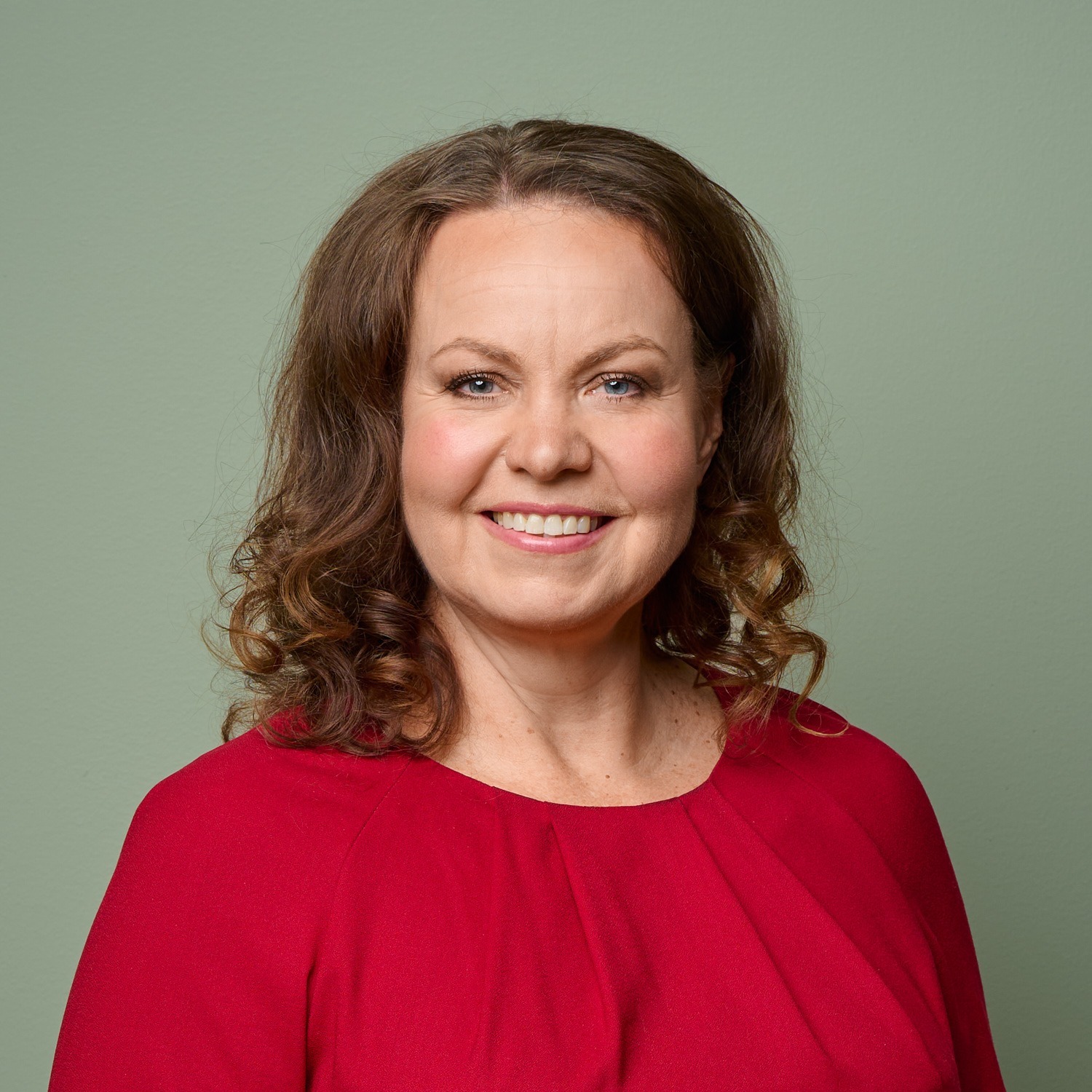
About Hanna Hartikainen

Hanna Hartikainen has been Chief Executive Officer of Fennia since March 2025. She joined Fennia after serving as Chief Executive Officer of LähiTapiola Keskinäinen Vahinkovakuutus, one of Finland’s leading non‑life insurance companies. Earlier in her career, Hartikainen was CEO of OP‑Henkivakuutus Oy, and she has held numerous senior leadership roles across the finance and insurance sectors, including key positions at Pohjola Vakuutus and Osuuspankkikeskus (OP Central). Throughout her career, she has brought deep expertise in insurance operations, change management, and strategic leadership to every role she has undertaken.

A graduate of the Helsinki School of Economics, Hartikainen holds a Master of Science degree in Economics and Business Administration, and she also completed an Executive MBA (eMBA) at the University of Jyväskylä, equipping her with strong analytical, financial, and strategic management skills.


About Fennia

Fennia is a Finnish mutual insurance group, founded in 1882, specialising in non‑life, property, and life insurance for businesses, entrepreneurs, and private customers. Operating under the mutual model, its clients are also owners, ensuring a customer‑driven approach to governance and product development.

The group includes Fennia (non‑life insurance), Fennia Life (life, pension, and savings insurance), and Fennia‑service Ltd (operational support), providing integrated risk management, statutory and voluntary insurance solutions, and financial safety planning across Finland.

Fennia has invested in modernising its systems and digital services while maintaining a strong focus on customer experience, operational efficiency, and long‑term market resilience.
Summary

Over the past 25 years, Fennia has undergone its most transformative changes through the shift from branch offices and phone-based services to digital channels, fundamentally reshaping the Finnish insurance market. As Hanna Hartikainen notes, “Our customers expect our services to be as instant and seamless as any modern digital service, and naturally, this is exactly what Fennia strives to deliver.”


Looking ahead, emerging technologies will enable new value-creation models and more personalized service. Yet, Hartikainen emphasizes that these tools will complement rather than replace human expertise, particularly in areas that require trust and complex decision-making.


Fennia is actively preparing for the future by strengthening business and IT resilience, investing in flexible data systems, and cultivating leadership and organizational capabilities that support adaptation. In doing so, the company is ensuring it can continue to serve its customers effectively in a rapidly evolving insurance landscape.

Questions of Marcin Pluta, President of Sollers Consulting,
to Hanna Hartikainen, CEO of Fennia

Marcin Pluta: Last 25 years – In your opinion, which technological developments have been the most groundbreaking or influential in the insurance industry over the past 25 years? Could you share any examples that you have personally experienced, particularly in the context of the insurance market in Finland?

Hanna Hartikainen: The most far-reaching change has been the move from branch offices and phone-based services to digital channels – one that has reshaped Finnish insurance just as it has reshaped many other sectors. But the transformation goes well beyond customer-facing portals: the automation and analytics that support the entire value chain.

Our customers expect our services to be as instant and seamless as any modern digital service and naturally, this is exactly what Fennia strives to deliver.
"Our customers expect our services to be as instant and seamless as any modern digital service, and naturally, this is exactly what Fennia strives to deliver."

Marcin Pluta: Current challenges – The world is currently facing numerous geopolitical, economic and environmental challenges. Which do you consider to be the most important from Fennia’s perspective? How are you tackling them?

Hanna Hartikainen: It is difficult to single out just one risk. With Fennia's 144-year history, our most important responsibility is to ensure long-term business continuity, and that involves preparing for more than one adverse outcome. Beyond managing our own risks, our key task is naturally to help our owner-customers reduce theirs – a topic that continues to gain importance given the challenges in the operating environment.

As one practical example, we are investing heavily in both business and IT resilience. This helps ensure that we can continue serving our customers for the next 144 years – and beyond.

Marcin Pluta: Next 25 years – What changes will have the greatest impact on the insurance industry in the future? What do you expect for Fennia’s business? What role will technological developments such as Generative AI, Autonomous Agents, No-code Platforms, Telematics & IoT as well as Climate Analytics play?

Hanna Hartikainen: The insurance industry will continue to be shaped by increasingly fast-changing risks, rising customer expectations for quicker and more personalised service, and tightening requirements for transparency in pricing, data, and decision-making.

The development and adoption of agentic AI is likely to have a significant impact on our business, but the biggest impact may come from a use case not yet invented. This places an enormous demand on insurers' ability to adapt.

Improved access to data and more versatile ways of using it will create new, viable value-creation models across the wider insurance ecosystem. Insurance has always been a data business, and for decades it has also been a software business.

It is also worth noting that some parts of the market – customers, partners, and suppliers – will continue to cling to old ways of operating and legacy systems. As an incumbent insurer with both future ambitions and an existing base built over a long history, we need to be able to take advantage of the new tools available to us without risking the trust placed in us by our current customers.
"The biggest impact may come from a use case not yet invented. This places an enormous demand on insurers' ability to adapt, and success comes down to proactively leading the company down the right path."

Marcin Pluta: Customer relationships – Insurance companies have been building complex customer relationships for a long time. This is coming under additional pressure due to changing customer habits in the wake of digitalisation. How will the insurance industry react to the changed situation? Do you believe that AI-enabled digital and mobile communication channels will eventually take over insurers' customer relationships?

Hanna Hartikainen: These new communications channels will complement our customer interaction, not replace it. There are at least two sides to this.

The first relates to insurance companies: digital and AI-enabled self-service channels, as well as AI service channels, are taking over some of the work that previously required human effort. Some customers already prefer digital tools or AI service agents. As these tools and their adoption rates improve, insurers can deploy them more widely, delivering faster and better services. However, areas requiring higher trust and a human touch will remain a central part of the business and will continue to be human-driven.

The second side relates to insurance partners that are not insurance companies – for example, embedded insurance, where the insurance product is something tied to a transaction and practically all customer-facing interaction is handled by the party with whom the customer is completing that transaction.

Embedded insurance will continue to grow as digital ecosystems strengthen. More data will be available, and more products can feasibly have an embedded insurance component that customers perceive as creating value. However, areas requiring higher trust and a human touch will continue to represent a major part of the business and will continue to be human-driven.

Marcin Pluta: Navigating Transformation – The insurance sector is currently experiencing significant structural and operational changes. What are the anticipated developments in the future of insurance models, and what potential innovations could serve as the next major breakthrough for the industry? How can insurance companies strategically position themselves to adapt and thrive in this evolving landscape?

Hanna Hartikainen: When multiple innovations come together – along with a touch of regulation – there is potential for major breakthroughs. For example, if insurers could combine real-time vehicle telematics data with weather data, they could offer genuinely dynamic pricing, rewarding safer driving as well as smarter choices about when to drive and when not to.

Foresight requires the ability to identify what could become, and what is becoming, important. This is both critical and difficult, and comes down to the capacity and capability of the people leading the insurance company. There are no shortcuts – success comes down to proactively leading the company down the right path.

For the ability to adapt to change, there are several important elements, of which I would highlight two. One is technical: the greater your ability to change where you get data from, what data you get, where you send data to, and what data you send, the greater your ability to shift with the various systems you are connected to. This can mean changes internally, with more automated or optimised processes. Or it can mean changes to how you communicate with the external systems of your partners, for example.

The other is organisational. Even the best tools deliver little value if people are not mobilised to use them, or shown how to use them well. Here, the quality of leadership is again tested. Can you communicate what is needed, and do it in a way that inspires action? There is also the matter of organisational structure – is it clear what drives your activity, and does your organisation properly enable change? All of this is something we have spent time and effort on at Fennia, and it should give us a greater ability to respond to changes in the operating environment.

CEO Voices Interviews

CEO Voices An Interview with Gayle M. Page, President of FMNE Insurance
CEO Voices CEO Voices – Interview with Michael Knaup, CEO of DEVK
CEO Voices Human Relations and the Impact of AI in Insurance
Björn Dalemo
CEO Voices CEO Voices – Interview with Björn Dalemo President and CEO of Länsförsäkringar AB
Jeanette Ward - CEO of Texas Mutual
CEO Voices CEO Voices – Interview with Jeanette Ward, CEO of Texas Mutual
CEO Voices AI and Human Impact –
Sollers “CEO Voices” Report
CEO Voices CEO Voices – Interview with Nick Moore, CEO of Argenta Group
CEO Voices CEO Voices – An Interview with Hanna Hartikainen, CEO of Fennia
CEO Voices CEO Voices – An Interview with Brenda Gibson, CEO of Red River Mutual
Juerg-Schiltknecht-Helvetia-Deutschland
CEO Voices CEO Voices – Interview with Dr Jürg Schiltknecht, CEO of Helvetia Deutschland

Leave your comment

Marcin Pluta
President