Home » Insights » An Interview with Gayle M. Page, President of FMNE Insurance

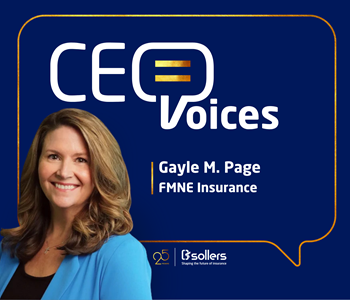
An Interview with Gayle M. Page, President of FMNE Insurance


Why relationships still matter in the future of insurance

About Gayle M. Page

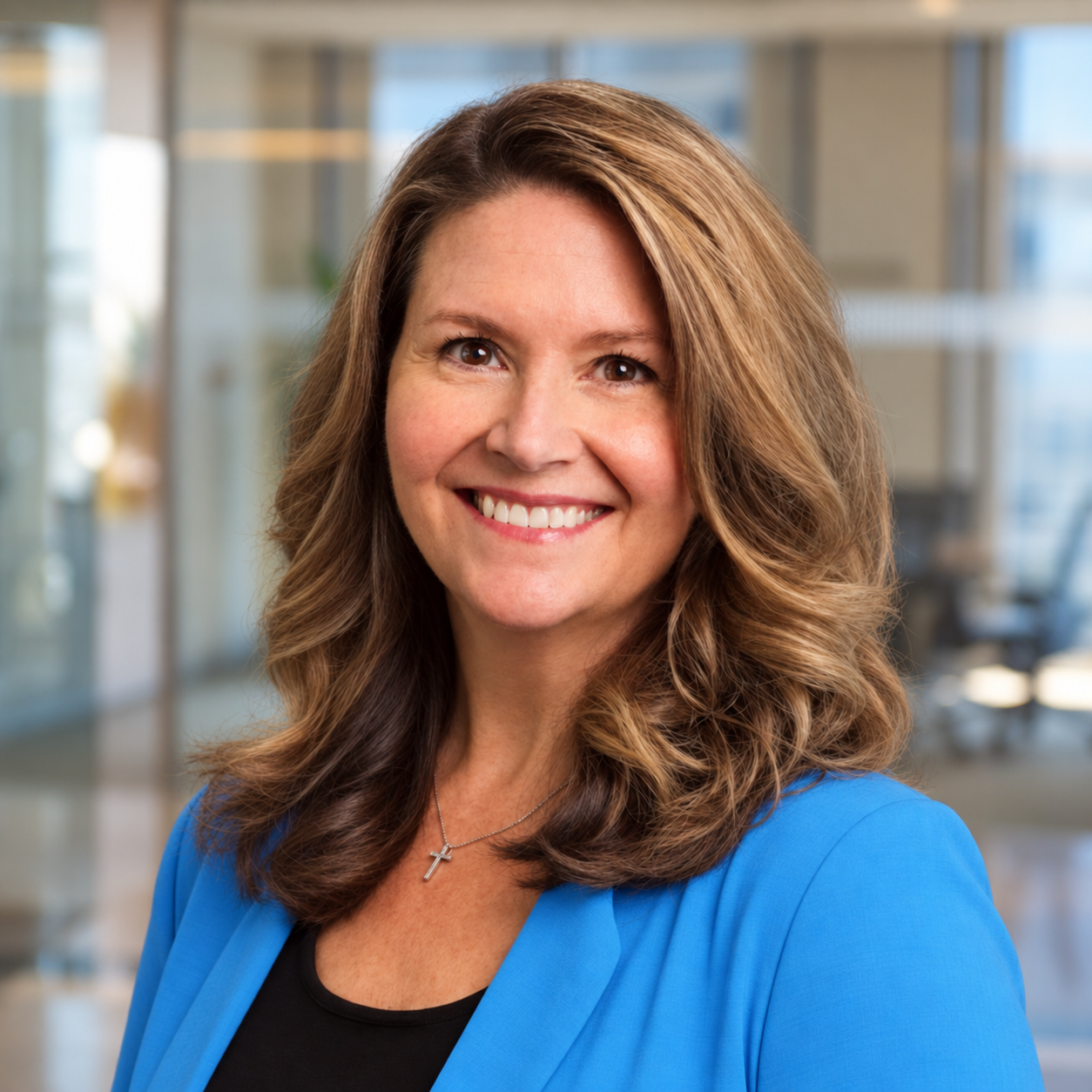
Gayle M. Page is President of FMNE Insurance and the first female president in the company's more than 130-year history. She has built her career within the organization, serving in a variety of leadership roles before being appointed President in 2024.

Known for her people-centered leadership style, Page is guiding FMNE through a period of strategic growth and technological transformation. As President, she is overseeing major initiatives including FMNE's migration to Guidewire Cloud, the development of enterprise-wide data capabilities, and the company's expansion into new markets. Throughout these efforts, she has stressed the importance of preserving FMNE's culture, values, and commitment to local communities while preparing the organization for future industry challenges.



About FMNE Insurance

Founded in 1891 by a group of Nebraska farmers, FMNE Insurance has grown from a local mutual insurer into one of the most respected regional property and casualty insurance organizations in the United States. Today, the company serves policyholders across Nebraska, South Dakota, and North Dakota through a network of independent agents.

As part of a mutual insurance holding company structure, FMNE is ultimately wholly owned by its policyholders rather than shareholders. This structure enables the organization to focus on long-term financial strength, customer service, and sustainable growth. The company provides auto, farm, home, and related insurance products while maintaining a strong commitment to local relationships and community involvement.


About FNME Insurance

Founded in 1891 by a group of Nebraska farmers, FMNE Insurance has grown from a local mutual insurer into one of the most respected regional property and casualty insurance organizations in the United States. Today, the company serves policyholders across Nebraska, South Dakota, and North Dakota through a network of independent agents.

As part of a mutual insurance holding company structure, FMNE is ultimately wholly owned by its policyholders rather than shareholders. This structure enables the organization to focus on long-term financial strength, customer service, and sustainable growth. The company provides auto, farm, home, and related insurance products while maintaining a strong commitment to local relationships and community involvement.

Summary

Gayle M. Page discusses how digital transformation, data analytics, cloud technology, and automation have reshaped the insurance industry and helped FMNE improve efficiency while maintaining its strong service culture. She also addresses the challenges of weather volatility, economic uncertainty, and changing customer expectations, highlighting FMNE's focus on disciplined growth and long-term stability.

Looking to the future, Page believes AI, advanced analytics, and evolving risk patterns will drive industry change. She emphasizes that FMNE's investments in Guidewire Cloud and data capabilities will strengthen decision-making, improve customer and agent experiences, and support growth without sacrificing the relationships and values that define the company. 

Questions of Michał Trochimczuk, President of Sollers Consulting,
to Gayle M. Page, President of FMNE Insurance

Michał Trochimczuk: Last 25 years: What have been the most important technological developments for the insurance industry in the last 25 years and what significance have they had for FMNE's business? 

Gayle M. Page: Over the last 25 years, the insurance industry has been transformed by the shift from paper-based, manual processes to digital platforms, the rise of data and analytics, cloud technology, and more recently, automation and artificial intelligence.

For FMNE, the significance has been substantial. Historically, insurance was highly transactional and paper heavy, with underwriting, policy issuance, billing, claims, and agent communications relying heavily on manual workflows and institutional knowledge. Technology has allowed us to become more efficient, more consistent, and more responsive.

Key advancements for FMNE have included modernizing our core systems, improving digital connectivity with agents, expanding our use of data and analytics, adopting cloud technology, and increasing automation. Together, these capabilities have improved efficiency, strengthened decision-making, enhanced security and resiliency, and allowed our employees to focus more on serving customers and building relationships.

Most importantly, technology has helped FMNE preserve what makes us strong: our relationships, service culture, and local focus, while modernizing how we operate. The goal has never been technology for its own sake, but to give our people and agents better tools to serve customers, make better decisions, and remain competitive in a changing market.

"The companies that succeed will be those that can modernize without losing their identity.”

Michał Trochimczuk: Current challenges: The world is currently facing numerous geopolitical, economic and environmental challenges. Which do you consider to be the most important from FMNE's perspective? How are you tackling them?

Gayle M. Page: From FMNE’s perspective, the most important challenges are environmental volatility, economic pressure, geopolitical uncertainty, reinsurance market dynamics, and the pace of technological change.

The most immediate challenge for a property insurer is weather volatility and catastrophe risk. The P&C industry is facing more complex and volatile loss patterns, particularly from severe weather, which is putting pressure on underwriting, pricing, reinsurance, and long-term affordability.

At the same time, economic uncertainty continues to affect the cost of repairing and rebuilding homes, farms, and businesses through inflation, labor shortages, supply chain disruption, and interest rate fluctuations. These pressures directly impact claim severity, pricing adequacy, and customer affordability. The industry is also seeing margin pressure as premium growth slows and competition increases, making operational efficiency and disciplined underwriting even more important. Geopolitical uncertainty adds another layer of complexity by influencing supply chains, replacement costs, financial markets, and reinsurance capacity. While FMNE operates with a strong regional and mutual company focus, we are not insulated from broader global economic and geopolitical trends.

To address these challenges, we remain focused on disciplined underwriting to ensure we grow responsibly and maintain a clear understanding of the risks we assume. We continue to strengthen our reinsurance program to protect policyholders, preserve financial strength, and support the company's long-term stability. We are also investing in data, analytics, and technology, including Guidewire Cloud and our enterprise data warehouse, to improve our understanding of risk, enhance decision-making, and increase operational efficiency. In addition, we are pursuing measured expansion into new states that provide greater geographic and peril diversification while creating opportunities for profitable growth. Equally important, we maintain open and transparent communication with agents, customers, employees, and regulators so that we can navigate changing market conditions together.

As a mutual insurance organization, our focus is not on short-term reactions, but on making thoughtful decisions that preserve financial strength, support our agents, protect policyholders, and position FMNE for the long term.

Michał Trochimczuk: Next 25 years: What changes will have the greatest impact on the insurance industry in the future? What changes do you expect for FMNE's business specifically? 

Gayle M. Page: Looking ahead, I believe the greatest changes in the insurance industry will come from four areas: weather volatility, artificial intelligence and analytics, customer expectations, and talent.

Weather and catastrophe risk will continue to reshape the property insurance market, requiring insurers to use more sophisticated tools, forward-looking models and property-level insights to evaluate and manage risk. At the same time, AI, automation, and advanced analytics will change how insurance work gets done, helping insurers improve underwriting, claims, pricing, customer service, and operational decision-making.

Customer and agent expectations will also continue to evolve. People are used to speed, transparency, and digital convenience, while still valuing the trusted advice and relationship-based service that carriers like FMNE and our independent agents can provide. In addition, talent and culture will remain critical. While technology will change how we work, qualities such as judgment, empathy, leadership, and trust will continue to differentiate successful organizations.

For FMNE, these trends will drive a greater reliance on data-driven underwriting, pricing, and claims decisions, a more seamless digital experience for agents and customers, increased automation of routine work and more sophisticated catastrophe management and reinsurance strategies. At the same time, we expect to maintain a strong focus on our mutual values, local relationships, and long-term stability.

The companies that succeed will be those that can modernize without losing their identity. For FMNE, that means using technology to strengthen, not replace, the relationships and service culture that have been central to our success.
"The goal has never been technology for its own sake, but to give our people and agents better tools to serve customers, make better decisions, and remain competitive in a changing market."

Michał Trochimczuk: FMNE is already on its journey to Guidewire Software Cloud and is building an enterprise data warehouse. What business value do you expect to realize from these initiatives? What tangible improvements or new capabilities will this technology transformation deliver for FMNE’s agents and customers?

Gayle M. Page: Guidewire Cloud and our enterprise data warehouse are foundational investments for FMNE. They are not simply technology projects; they are business transformation initiatives designed to help us operate more efficiently, make better decisions, and better serve our agents and customers.

Guidewire Cloud will help modernize our operating model by reducing manual processes, improving workflow consistency, and providing better visibility across policy, billing, underwriting and claims functions. Over time, it will also improve our ability to bring new products, pricing changes, and capabilities to market more quickly, which is increasingly important as we expand into new states and respond to changing market conditions.

The enterprise data warehouse will allow us to bring together information from across the organization and turn it into usable business intelligence. This will strengthen decision-making around underwriting, profitability, claims performance, growth opportunities, customer needs, and agent relationships.

For agents, these investments should deliver more intuitive tools, faster access to information, improved transaction capabilities, and clearer visibility into policy and customer activity. This will allow agents to spend less time navigating systems and more time advising customers and growing their business.

For customers, we expect improvements in speed, accuracy, and convenience, including smoother policy, billing and claims experiences.

Just as importantly, these technologies will provide the flexibility, scalability, and resiliency needed to support FMNE’s future growth, expanding data capabilities, and evolving customer expectations.

Simply put, Guidewire Cloud gives us a modern operating platform, while the enterprise data warehouse provides the insight needed to use that platform effectively. Together, they will help FMNE become faster, smarter, more scalable, and better positioned for the future.

Michał Trochimczuk: As FMNE looks to expand its market share, what role does technology play in enabling this growth? How do you see digital platforms, data, and analytics helping FMNE strengthen its competitive position and reach new opportunities?

Gayle M. Page: Technology plays a critical role in enabling FMNE’s growth, but it is not the growth strategy alone. Our growth will continue to come from disciplined underwriting, competitive products, accurate pricing, excellent service, and financial strength. Technology is the enabler that allows us to execute that strategy more effectively and at scale.

As FMNE expands its market share, digital platforms make it easier for agents to do business with us by providing more efficient quoting, servicing and access to information. At the same time, data and analytics help us identify profitable growth opportunities, better understand changing risks, and make more informed underwriting and pricing decisions. These capabilities become increasingly important as we enter new markets and evaluate local risk characteristics, weather patterns, competitive dynamics, and profitability drivers. Technology also improves scalability by allowing us to manage increased transaction volumes, claims activity, data, and service demands without adding unnecessary complexity or relying on manual processes.

Equally important, it helps us deliver the speed, convenience, and transparency that customers increasingly expect, while preserving the trusted relationships that remain at the heart of the independent agency model.

For FMNE, the competitive advantage is not technology alone, but the combination of modern technology and a relationship-driven culture. Many companies can invest in systems, but what differentiates us is how we use those capabilities to serve customers, support agents, and maintain the financial strength and local focus that define FMNE. In that sense, technology helps us deliver on our commitment to be Always alongside you.®

CEO Voices Interviews

CEO Voices An Interview with Gayle M. Page, President of FMNE Insurance
CEO Voices CEO Voices – Interview with Michael Knaup, CEO of DEVK
CEO Voices Human Relations and the Impact of AI in Insurance
Björn Dalemo
CEO Voices CEO Voices – Interview with Björn Dalemo President and CEO of Länsförsäkringar AB
Jeanette Ward - CEO of Texas Mutual
CEO Voices CEO Voices – Interview with Jeanette Ward, CEO of Texas Mutual
CEO Voices AI and Human Impact –
Sollers “CEO Voices” Report
CEO Voices CEO Voices – Interview with Nick Moore, CEO of Argenta Group
CEO Voices CEO Voices – An Interview with Hanna Hartikainen, CEO of Fennia
CEO Voices CEO Voices – An Interview with Brenda Gibson, CEO of Red River Mutual
Juerg-Schiltknecht-Helvetia-Deutschland
CEO Voices CEO Voices – Interview with Dr Jürg Schiltknecht, CEO of Helvetia Deutschland

Contact

Michał Trochimczuk
President of Sollers Consulting