Home » Insights » CEO Voices – an Interview with Richard Milner, CEO of Chaucer Group

CEO Voices – an Interview with Richard Milner, CEO of Chaucer Group


Why the best insurance decisions will still be human made

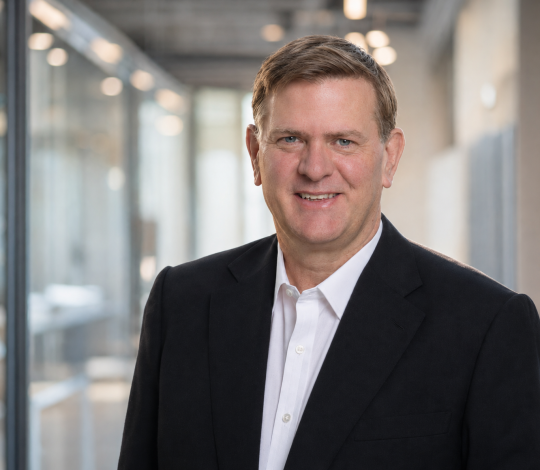
About Richard Milner

Richard Milner is Chief Executive Officer of Chaucer Group, leading the company’s strategy, growth, and transformation agenda. With more than 25 years of experience in the global (re)insurance market, including senior leadership roles at Aspen and AXIS Capital, he has extensive expertise across Lloyd’s and international markets. Milner is particularly focused on combining underwriting excellence with data, technology, and innovation to help Chaucer navigate an increasingly complex risk landscape.


About Chaucer

Chaucer Group is a leading global specialty (re)insurance company headquartered in London and operating through Lloyd’s and company markets. Backed by China Re Group, the business provides insurance and reinsurance solutions across a wide range of specialty classes, serving clients through a global network spanning Europe, the Americas, the Middle East, and Asia-Pacific. Chaucer combines underwriting expertise, strong client relationships, and a growing focus on technology and data-driven decision-making.



About Chaucer Group

Chaucer Group is a leading global specialty (re)insurance company headquartered in London and operating through Lloyd’s and company markets. Backed by China Re Group, the business provides insurance and reinsurance solutions across a wide range of specialty classes, serving clients through a global network spanning Europe, the Americas, the Middle East, and Asia-Pacific. Chaucer combines underwriting expertise, strong client relationships, and a growing focus on technology and data-driven decision-making.
Summary

Richard Milner reflects on how technology has transformed from a support function into a strategic enabler of underwriting, risk management, and client service. He discusses the growing impact of AI, data, and cloud technologies, while stressing that human expertise and judgement will remain at the heart of specialty insurance.

Looking ahead, he sees climate change, geopolitical uncertainty, cyber risk, and the energy transition as key forces shaping the market, and explains how Chaucer's transformation programme is helping the business combine innovation with underwriting excellence, strong culture, and long-term growth.

Questions of Michał Trochimczuk, President of Sollers Consulting,
to Richard Milner, CEO of Chaucer Group

Michał Trochimczuk: Last 25 years: What have been the most important technological developments for the insurance industry in the last 25 years and what significance have they had for Chaucer's business?

Richard Milner: Over the last 25 years, I’ve seen how technology has moved from being something that previously sat in the background to something that is now central to how the industry works. We’ve seen significant change across our company, not just in how we place business and understand risk, but also in the way we use data and develop our underwriting and claims capabilities. More recently, we’re seeing how cloud technology and AI are starting to change our day-to-day work.

Chaucer is a specialty underwriting business, and our biggest strength will always be our people. Their judgement, relationships and ability to deal with complex risk will be augmented by technology, rather than replaced by it, helping us to manage our portfolios more effectively. With better data, modelling, and more joined-up systems, we can make sharper decisions and respond more quickly to brokers and clients.

The market has also become much more connected. Electronic placement, catastrophe modelling, exposure management and richer third-party data have all helped us move from simply reacting to risk, to having a much better view of it earlier on. For Chaucer, that has helped us grow internationally while still holding on to what makes the London Market special: expertise, entrepreneurial underwriting, and personal relationships.

Today, we’re trying to build on that through our wider transformation work. We’re investing in key areas such as cloud technology and improving our underwriting tools, while also looking to strengthen our data platform and see how AI can help with key processes like submission ingestion and triage. I’m clear that our investments in technology should always be focussed on making work simpler, giving our people better information, and freeing them up to focus on the conversations and decisions where they add the most value.

"Clients and brokers will want insight, speed, and practical solutions. The insurers that succeed will be those that offer more than simply that combine strong human expertise with better technology.”

Michał Trochimczuk: Current challenges: The world is currently facing numerous geopolitical, economic and environmental challenges. Which do you consider to be the most important from Chaucer’s perspective? How are you tackling them?

Richard Milner: From Chaucer’s point of view, the biggest challenges are the ones that make risk more complex, more volatile and more connected. Geopolitical instability, economic uncertainty and climate change are all areas that are adding complexity to the risks we underwrite, and are all areas we pay significant focus to. We are also spending considerable time looking at how many of these challenges interact. Events such as conflict and sanctions can have knock-on effects across many different areas of our business, for example supply chains, inflation, food security and the energy transition, while extreme weather adds a further layer of complexity.

Our job is to stay disciplined, remain informed, look ahead, and stay close to the risks we underwrite. That means investing in specialist underwriting expertise, sophisticated tools and information, and managing our portfolios carefully, while improving the quality of our data and making sure our risk appetite keeps pace with a changing world. We are not trying to avoid complexity; specialty insurance exists because complex risks need expertise, but we do need to be clear about where we can add real value and insight, and where the terms, pricing and structure of a risk make sense.

Climate change and the energy transition are good examples. We see the impact of extreme weather, underinsurance, and new types of exposure across many of our classes. At the same time, the move to a lower-carbon economy is driving demand for insurance capacity and technical expertise, especially in marine, energy and emerging technologies. At Chaucer, we are building our renewable energy offering, developing specialist capability and embedding ESG in how we make decisions across the organisation.

Michał Trochimczuk: Next 25 years: What changes will have the greatest impact on the insurance industry in the future? What changes do you expect for Chaucer's business specifically?

Richard Milner: Twenty-five years is a long time, so I think we have to be cautious about making firm predictions. What does seem certain, is that technology, and particularly artificial intelligence will play a major role in reshaping how the market and companies operate. This is alongside some other very powerful forces such as climate change, the energy transition, cyber threats, and the continued evolution of global capital. Our clients will face new and evolving risks, while also expecting more from their insurers as the world around them continues to change.

For the industry, I think the biggest shift will be that insurers will need to offer more than simply capacity. Clients and brokers will want insight, speed, and practical solutions, and that is where a business like Chaucer, which has real leadership capabilities, can add significant value. They will expect us to understand emerging risks, use data and analytics well, respond quickly and help shape solutions around more complex needs. The businesses that flourish will be the ones that successfully combine strong human expertise with better technology and a disciplined approach to innovation.

Chaucer’s ambition is clear: we want to build a global (re)insurance group, driven by ambition, underpinned by excellence and united by culture. To do that, we need to keep strengthening our underwriting and claims capability, broaden our global footprint, grow the right partnerships, invest in data and technology, and protect the culture that has made Chaucer successful. We will stay underwriting-led, but the way our underwriters work will continue to evolve. They’ll be better equipped than ever before, with technology taking on more routine work and providing deeper insight so that they can focus on the complex decision-making and relationships that set us apart.

"The biggest challenge is not really the technology itself. It is making sure we deliver change whilst bringing our people with us and protecting our existing strengths."

Michał Trochimczuk: Chaucer is undertaking a major enterprise-wide transformation, evolving its operating model, modernising underwriting tools, strengthening technology, and embedding data-driven decision-making across the organisation. As you navigate this journey, what do you see as the biggest organisational challenges and opportunities, and how are you ensuring Chaucer has the right skills, culture, and partnerships to deliver its long-term strategy successfully?

Richard Milner: For us, transformation is really about turning our long-term ambition into practical change. We’re looking at how the business operates, strengthening our technology, improving our data and modernising our underwriting tools so Chaucer can scale and adapt in the years ahead. We have a great opportunity to equip our people with better insights and information, helping them to make better decisions and focus their time where it delivers the most value.

The biggest challenge is not really the technology itself. It is making sure we deliver change whilst bringing our people with us and protecting our existing strengths. We have a strong underwriting-led culture, deep technical expertise and very close relationships across the market. We want to modernise, but without losing any of that. We need to clearly communicate the reasons for change, and make sure transformation stays practical and tied to real outcomes.

We’re also putting more structure around how we deliver change. Our Transformation Management Office helps us coordinate this work across the organisation and ensures we’re focusing on the priorities that matter most. At the same time, we’re investing in the foundations - areas like cloud migration, modernising our data platform, and defining the business capabilities we need - while also looking for practical opportunities where automation and AI can help.

Skills and culture are a huge part of this. We need people who understand insurance, but who are also curious, adaptable and confident using data and technology. That means attracting great talent, and developing and keeping them, as well as strengthening our leadership. We’re determined to maintain our collaborative culture, where people feel able to challenge one another and find better ways of working. We will not build everything ourselves, so it is critical that we find the right technology partners and data providers that can help us move faster, learn more and deliver better outcomes.

In the end, transformation will only be successful if it makes Chaucer better at the things we already do well: disciplined underwriting, a strong claims service, trusted relationships and a culture built around finding a way. Technology, data, and changes to our operating model are all there to support that. They should help us become more global, more efficient and more responsive, and ultimately, better able to support clients and brokers as the market continues to evolve.

CEO Voices Interviews

CEO Voices CEO Voices – an Interview with Mathieu Godart CEO of AXA France
CEO Voices CEO Voices – an Interview with Gayle M. Page, President of FMNE Insurance
CEO Voices CEO Voices – Interview with Michael Knaup, CEO of DEVK
CEO Voices Human Relations and the Impact of AI in Insurance
Björn Dalemo
CEO Voices CEO Voices – Interview with Björn Dalemo President and CEO of Länsförsäkringar AB
Jeanette Ward - CEO of Texas Mutual
CEO Voices CEO Voices – Interview with Jeanette Ward, CEO of Texas Mutual
CEO Voices AI and Human Impact –
Sollers “CEO Voices” Report
CEO Voices CEO Voices – Interview with Nick Moore, CEO of Argenta Group
CEO Voices CEO Voices – An Interview with Hanna Hartikainen, CEO of Fennia
CEO Voices CEO Voices – An Interview with Brenda Gibson, CEO of Red River Mutual

Contact

Michał Trochimczuk
President of Sollers Consulting