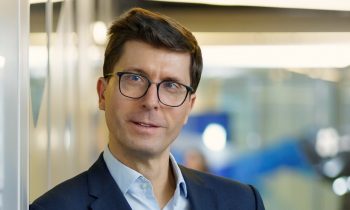
Nick Moore is Chief Executive Officer of Argenta Group, a role he assumed on 1 January 2023, having joined the Board in July 2022. He brings 25 years’ experience in the insurance industry, including the last two decades in the Lloyd’s market and has built a career spanning actuarial, capital and senior leadership roles within both the market and its institutions.
Nick joined Argenta’s managing agency, ASML, in 2009 as Chief Actuary, following earlier experience at the Corporation of Lloyd’s where he held roles across marketing, reserving and capital. He began his career at Swiss Re as an Actuarial Analyst. Nick was appointed to the Board of ASML in July 2012 and became Managing Director with effect from 1 January 2023, alongside his role as Group CEO.
He holds a First-Class (Honours) degree in Mechanical Engineering from the University of Nottingham and was appointed to the Board of the Lloyd’s Market Association in January 2026.

Argenta Group is a specialist underwriting and insurance services business operating in the Lloyd’s market and a wholly owned subsidiary of Hannover Re. Through Argenta Syndicate Management Ltd (ASML), the Group manages Lloyd’s Syndicate 2121 and SPA 6134, underwriting a diversified portfolio of insurance and reinsurance risks including Property (direct and treaty), Energy and Marine, Casualty (including Financial Lines), and Specialty risks such as Cyber, Construction & Engineering, Political Risks, Power, Utilities & Sustainable Energy, and Terrorism & Political Violence.
Argenta Group is a specialist underwriting and insurance services business operating in the Lloyd’s market and a wholly owned subsidiary of Hannover Re. Through Argenta Syndicate Management Ltd (ASML), the Group manages Lloyd’s Syndicate 2121 and SPA 6134, underwriting a diversified portfolio of insurance and reinsurance risks including Property (direct and treaty), Energy and Marine, Casualty (including Financial Lines), and Specialty risks such as Cyber, Construction & Engineering, Political Risks, Power, Utilities & Sustainable Energy, and Terrorism & Political Violence.
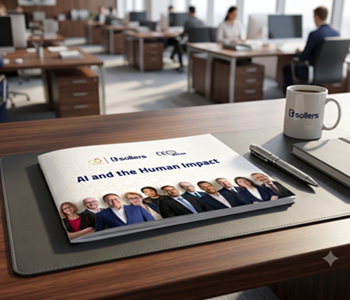
Over the past 25 years, Argenta Holdings has been shaped by advances in data and analytics, improving how risks are assessed and how quickly claims are handled. As Nick Moore notes, artificial intelligence is becoming a key enabler of efficiency and better decision-making, while continuing to support – not replace – human expertise.
At the same time, Argenta is responding to growing global uncertainty by focusing on resilience, relevant products, and strong claims capabilities. Through investments in modern underwriting platforms and digital skills, the company is preparing for a more data-driven, efficient, and connected future within the Lloyd’s of London market.
Michał Trochimczuk: Last 25 years – What have been the most important technological developments for the insurance industry, and what significance have they had for Argenta?
Nick Moore: Over the last 25 years, the pace of technological change has been extraordinary. It’s transformed not only the risks we insure but also how we understand, evaluate and respond to them.
One of the biggest shifts has been our ability to collect and meaningfully use data. Technology has revolutionised the way we analyse data, allowing us to assess risks far more quickly and accurately than before. It’s also made a real difference to partners and clients, particularly in how quickly and smoothly we can now pay claims, which goes right to the heart of what insurance is for.
Looking ahead, I believe the most significant development for our industry, and for Argenta, is artificial intelligence. We’re already using AI across the business, from summarising board papers to supporting our pricing models and accelerating risk selection. For us, AI is currently a tool to improve efficiency, not a substitute for human judgement. It allows our teams to focus their time and energy where it adds the greatest value, freeing them from lower value tasks so they can focus on the complex, interesting work where experience and judgement really matter. The insight and expertise of our people remain central to everything we do.Michał Trochimczuk: Current challenges – Of today’s geopolitical, economic and environmental pressures, which matter most for Argenta? How are you responding?
Nick Moore: We’re operating in a period of heightened global volatility, with rising geopolitical tension, disrupted markets and increasingly complex physical, digital and economic risks. These pressures are compounded by economic turbulence, persistent inflation, fluctuating interest rates and ongoing supply chain disruption, all of which directly influence loss patterns, claims costs and investment returns. Climate change remains a fundamental long term challenge, driving more severe weather, greater asset concentration in vulnerable areas and a pace of risk evolution that outstrips historical models. What links all of this is uncertainty. Past experience is no longer enough.
Our approach is to adapt alongside our clients and partners: helping them build resilience, supporting them through instability and ensuring we continue to provide products that are both relevant today and robust for the future. Alongside this, we place strong emphasis on effective claims capability and transparency around what is covered, because providing certainty at the point of loss is fundamental to the value insurance delivers in an increasingly uncertain world.
Michał Trochimczuk: The next 25 years – What developments will have the greatest impact on the insurance industry and on Argenta specifically?
Nick Moore: In the future, AI will simply be part of everyday working life, much like email is today. The next generation of the workforce will have grown up with it and the distinction between “AI tasks” and “non AI tasks” will fade. For Argenta, this means the ability to work more quickly with a broader range of rich datasets, enabling more precise, more personalised and more dynamic insurance solutions. AI will of course drive significant efficiency gains, but it will also help us understand where human expertise is most needed. The combination of smart automation and thoughtful human judgement is where the real value lies. Central to all of this is ensuring our people are digitally fluent and confident in using these tools. Preparing colleagues for this shift, building the right skills, mindset and comfort with new technology, will be just as important as the technology itself. Their expertise is critical in identifying AI opportunities and ensuring the solutions created are appropriate for our organisation, customers and wider stakeholders.
AI will increasingly shape how insurance is distributed and administered. Over time, smarter automation, better use of data and more connected systems should simplify how business is placed, serviced and renewed, reducing friction across the value chain. This has the potential to simplify interactions between insurers, brokers and clients, improve speed and accuracy, and lower operating costs. Together, these changes create scope for better value for clients and other stakeholders, while supporting a more efficient, responsive insurance market.
Michał Trochimczuk: Argenta’s transformation and the Send Underwriting Workbench: What impact has it had on Argenta, and what advice would you give to peers considering a similar change?
Nick Moore: Introducing the Send Underwriting Workbench has been a step change for Argenta. It’s bringing every team onto a single, intuitive platform where data, documents and decisions can live together. While we’re still on the journey, it is already improving speed, clarity and consistency across the underwriting process and as adoption grows, those gains will continue to build. For brokers and clients, the impact will become increasingly tangible: quicker responses, clearer insights and a smoother experience across all classes of business as the platform matures.
My advice to others is to choose technology that reflects how underwriters genuinely work. Make sure underwriters are involved from the outset, central to the decision-making and visibly sponsoring the programme. Build strong partnerships across your business with the vendor, stay close to the people using the tools and design with the future in mind. If you get those things right, improvements in efficiency, collaboration and confidence follow naturally.
Michał Trochimczuk: How does the Send rollout fit into Argenta’s wider strategic priorities, and what does it mean for the Lloyd’s marketplace and Lloyd’s authorised Managing Agencies?
Nick Moore: The Send platform is central to our strategy of building a modern, data driven underwriting operation. With every product and team working from the same workbench, we now have a strong foundation for better portfolio management, greater operational resilience and scalable, sustainable growth.
It also aligns perfectly with the direction of travel at Lloyd’s – towards a more digital, connected, efficient and structured marketplace. We’re positioned to integrate pricing, data enrichment, sanctions checks and future placement capabilities as the ecosystem evolves.
For MAs, this means stronger connectivity, cleaner data flows and faster, better informed decision making. It strengthens partnerships and creates new opportunities. Ultimately, it helps position Argenta, and our market, for a more innovative, adaptable and fundamentally more competitive future.