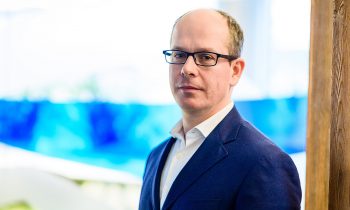
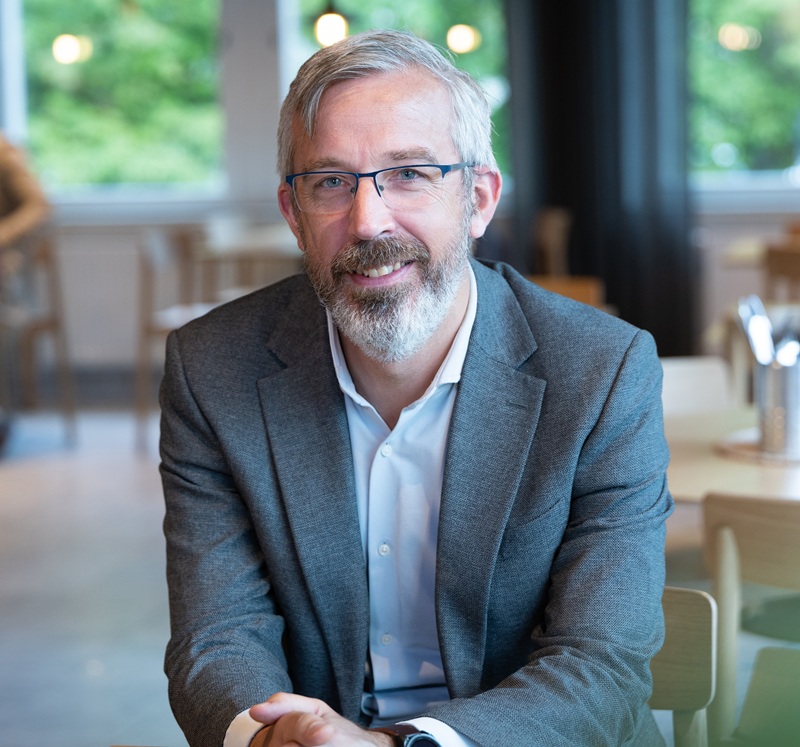
Since May 2025, Björn Dalemo has served as President and Chief Executive Officer of Länsförsäkringar AB, the jointly owned company of the Länsförsäkringar Alliance, following a period as Acting CEO. He was formally appointed to the role effective 1 December 2025. Dalemo joined Länsförsäkringar in 2019 as Head of the Property & Casualty Business Unit and has played a central role in driving the company’s strategic development and operational transformation across the federation. Prior to his tenure at Länsförsäkringar, he accumulated extensive industry experience in senior roles at Trygg‑Hansa, including serving as Chief Underwriting Officer. In addition to his CEO duties, Dalemo has held leadership responsibilities within the group’s business areas and contributed to initiatives strengthening collaboration with the regional insurance companies across Sweden.
Founded in the early 20th century, Länsförsäkringar AB is the joint company of the Länsförsäkringar Alliance, a customer owned financial services group in Sweden. The Alliance comprises 23 independent regional insurance companies, each owned by customers in their respective counties, which together offer a broad range of banking, insurance, pension and related services under the shared Länsförsäkringar brand.
Länsförsäkringar AB conducts development, strategic coordination and joint operations in banking, life assurance, non life insurance and animal insurance for the Alliance, enabling economies of scale and unified service delivery across the country. Through its subsidiaries, including one of Sweden’s larger retail banks and significant life insurance operations, the Group serves several million customers and supports comprehensive financial needs for individuals, businesses and agricultural clients.
Environmental and sustainability considerations are integrated into the operations of all companies within the Alliance, which are certified in accordance with international standards such as ISO 14001.
Founded in the early 20th century, Länsförsäkringar AB is the joint company of the Länsförsäkringar Alliance, a customer owned financial services group in Sweden. The Alliance comprises 23 independent regional insurance companies, each owned by customers in their respective counties, which together offer a broad range of banking, insurance, pension and related services under the shared Länsförsäkringar brand.
Länsförsäkringar AB conducts development, strategic coordination and joint operations in banking, life assurance, non life insurance and animal insurance for the Alliance, enabling economies of scale and unified service delivery across the country. Through its subsidiaries, including one of Sweden’s larger retail banks and significant life insurance operations, the Group serves several million customers and supports comprehensive financial needs for individuals, businesses and agricultural clients.
Environmental and sustainability considerations are integrated into the operations of all companies within the Alliance, which are certified in accordance with international standards such as ISO 14001.Over the past 25 years, data expansion, advanced analytics, and digitalisation have transformed insurance – enabling Länsförsäkringar AB to assess risk more granularly and deliver faster, more accessible customer experiences. Looking ahead, climate change and natural catastrophes represent structural challenges – while economic and geopolitical risks require ongoing management. Technological developments – including AI, IoT, and eventually quantum computing – will further embed insurance into everyday ecosystems, automate underwriting and claims, and enhance prevention. Digital channels will handle routine interactions – but human relationships remain crucial for trust and complex situations. Success in integrated insurance and banking depends on coherent customer journeys, strong local relationships, skilled execution, aligned incentives, and robust data infrastructure – ensuring Länsförsäkringar AB remains a trusted, customer‑owned, and increasingly data‑driven organization.
Marcin Pluta: Last 25 years: what have been the most important technological developments for the insurance industry in the last 25 years and what significance have they had for LFAB's business?
Björn Dalemo: If I look back 25 years, three developments really stand out for insurance: a huge increase in available data, more powerful analytics, and the rise of digital channels. We have gone from pricing and underwriting at a fairly broad portfolio level to being able to assess risk much more granularly, almost customer by customer in some lines. At the same time, machine learning and other predictive tools have changed how we select risk and manage claims, which has helped reduce loss ratios and fraud, but also raised the bar for what “good underwriting” means.
Digitalisation has been just as important. In LFAB’s case, internet and mobile services, online quote and buy journeys for home and motor, and internet banking have completely changed how we meet customers. Many interactions that used to be handled in a branch or on the phone are now managed digitally by the customer, leading to more frequent but shorter contacts, and much higher expectations for 24/7 access, speed, and simplicity.
Marcin Pluta: Current challenges: the world is currently facing numerous geopolitical, economic and environmental challenges. Which do you consider to be the most important from LFAB’s perspective? How are you tackling them?
Björn Dalemo: All three dimensions matter to us but they affect us in different ways and over different time horizons. Economic risks are the most familiar: recessions, inflation and market swings come and go, and we handle them through pricing, capital management and how we invest. Geopolitical risk is more about ongoing uncertainty and fragmentation; it creates “no-go” areas for underwriting, investments and technology partnerships; we also devote attention to sanctions compliance.
The environmental side, especially climate change and natural catastrophes, is the most structural challenge. We already see more frequent and severe weather losses, shifting risk maps and tighter regulation, which directly affects our claims costs, pricing and, in some areas, whether risks remain insurable. Our response is twofold. First, classic risk management: reinsurance, capital, pricing and careful exposure management. Second, prevention and transition: LFAB and the regional LF-companies run a lot of preventive work around climate, natural hazards and health through our products, loss-prevention services and local community initiatives. We also try to support the broader transition through our investments and financing, and we see that as both our responsibility as a customer-owned company and a strategic opportunity.
Marcin Pluta: Next 25 years: what changes will have the greatest impact on the insurance industry in the future? What do you expect for LFAB's business? What role will technological developments such as AI, IoT, quantum computers, etc. play?
Björn Dalemo: Forecasting 25 years ahead is risky, even two years is hard, but a few themes are quite clear. Insurance will be far more embedded in digital ecosystems, so instead of buying a separate policy, customers will get cover “inside” their car, their home platform, their bank, their employer. We will move from static products and annual renewals towards more continuous relationships, where prevention and real-time pricing play a much bigger role.
AI will be at the core of that shift. Underwriting and claims for many standard risks will be highly automated, and the real competition will be around data quality, how well we govern our models, and how quickly we can bind cover. IoT will give us continuous data from cars, homes, farms and businesses, which we can use both for pricing and for prevention. Quantum computing is further out, but over time it could change how we do heavy calculations in risk and capital management. For LF, the task is to stay what we are at our core; a trusted, locally anchored, customer-owned company – while becoming much more data-driven and modular in how we distribute, underwrite and deploy capital.
Marcin Pluta: Customer relationships: insurance companies have been building complex customer relationships for a long time. This is coming under additional pressure due to changing customer habits in the wake of digitalisation. How will the insurance industry react to the changed situation? Do you believe that AI-enabled digital and mobile communication channels will eventually take over insurers' customer relationships?
Björn Dalemo: Digitalisation is breaking up the traditional, long-term personal relationship into many short digital interactions, and that puts real pressure on how we think about customer relationships. I don’t think the answer is to “fight” that trend, but to redesign the relationship. Most simple needs, such as quotes, small policy changes, basic claims and documents, should be handled quickly and easily through digital and mobile channels. Human advice should be concentrated where it really matters - for example, major claims, life events, complex business risks and financial stress.
AI will be central to this. In many cases, it will be the first line of contact, through chat, voice and assistant tools that can solve simple issues and prepare information for our staff. Over time, this will shift a large proportion of interactions into digital channels, reduce costs and raise expectations on speed and personalisation. AI will not, however, replace the need for human relationships in insurance, because trust also depends on empathy and accountability when something serious occurs.
The bigger strategic question is who owns the customer interface: insurers or the platforms where insurance is embedded (banks, car manufacturers, tech platforms, employers). If insurers do not invest enough in good digital experiences and strong human support, the platforms will own the relationship and we risk becoming invisible, mere balance sheets in the background. The winners will be those who use AI and digital tools to deepen relationships, not dilute them.
Marcin Pluta: In the past 29 years LFAB has been building and expanding its banking operations. Bancassurance has faced many challenges and failures in the past. What are from your perspective the most important success factors of an integrated insurance and banking operation?
Björn Dalemo: The starting point is that integration must make life clearly better for the customer, not just for our organisation. A successful model offers a simple, coherent financial relationship: everyday banking, saving, lending and protection that fit together, rather than a random bundle of products. That means designing key journeys (buying a home, starting or growing a business, planning retirement) so that banking and insurance naturally support each other. For a local, customer-owned group like LF, combining a strong local presence, long-term relationships and a broad offering can be very powerful if we execute consistently.
The second success factor is execution in the front line. Cross-selling only works if advisors have the skills, tools and incentives to discuss both banking and insurance in a natural, needs-based way. Incentives should reward long-term relationship value and customer satisfaction, not just this year’s product sales. All of this must rest on a solid data and IT foundation, enabling a shared view of the customer and seamless digital journeys.
Finally, the economics must be realistic. The value of bancassurance should come from lower acquisition costs, higher retention and a higher share of each customer’s business, rather than assuming that every bank customer will buy several insurance products or vice versa. For LF, the critical ingredients are a clear and credible combined proposition, aligned distribution and incentives, strong shared data and systems, and governance that protects trust while allowing us to realise the full benefits of being both a bank and an insurer.